2. What Is Breast Cancer?
Breast cancer is a disease that occurs when cells in the breast begin to grow abnormally and divide without normal control. These cells may form a mass called a tumour. Some breast tumours are benign, meaning they are not cancerous, while malignant tumours are cancerous and can invade surrounding tissues or spread to other parts of the body.
The breast contains different types of tissue, including glandular tissue that produces milk, ducts that carry milk, fatty tissue, connective tissue, blood vessels, and lymphatic vessels. Most breast cancers begin in the milk ducts or the milk-producing glands called lobules.
Breast cancer can affect people of different ages, although the risk generally increases with age. It is more common in women, but men can also develop the disease because they have breast tissue too.
Not every breast lump is cancer. Cysts, fibroadenomas, infections, and other non-cancerous conditions can also cause lumps or changes in the breast. However, any new or unusual change should be evaluated by a qualified healthcare professional rather than ignored.
3. Why Is Breast Cancer Awareness Important?
Breast cancer awareness is important because many people do not recognize the early signs of the disease or may delay seeking medical attention because of fear, embarrassment, lack of information, or financial difficulties.
According to the World Health Organization (WHO), approximately 2.4 million women were diagnosed with breast cancer worldwide in 2024, and the disease caused an estimated 694,000 deaths that year. These figures demonstrate the importance of public education, early diagnosis, and access to effective treatment.
The major objectives of breast cancer awareness include:
-
Educating the public: Helping people understand what breast cancer is and how it develops.
-
Recognizing early warning signs: Teaching people to identify unusual breast changes.
-
Encouraging early diagnosis: Promoting timely medical consultation and appropriate screening.
-
Reducing stigma: Creating an environment where people can discuss breast health without shame or fear.
-
Supporting patients and survivors: Encouraging emotional, social, and practical support for people affected by breast cancer.
-
Promoting access to healthcare: Raising awareness about screening, diagnosis, and treatment services.
October is an opportunity for schools, hospitals, healthcare organizations, media outlets, and communities to share these messages and encourage people to take their health seriously.
4. Signs and Symptoms of Breast Cancer
Recognizing the signs and symptoms of breast cancer is one of the most important parts of awareness. Some breast cancers may not cause noticeable symptoms in their early stages, which is why appropriate screening is important.

1. A lump in the breast
A new lump or firm area in the breast is a common warning sign. It may be painless, so the absence of pain should not be used to rule out cancer.

2. Changes in breast skin
The skin may develop dimples, puckering, redness, swelling, or a texture resembling orange peel.

3. Changes in the nipple
A nipple may turn inward unexpectedly, or the skin around it may become irritated, scaly, or change in appearance.
4. Changes in breast size or shape
New swelling or an unexplained change in the size, shape, or appearance of one breast should be assessed.

5. Unusual nipple discharge
Fluid that comes from the nipple without breastfeeding, particularly bloody discharge, needs medical evaluation.

6. A lump or swelling under the arm
Breast cancer can affect lymph nodes near the breast, including those in the armpit, causing a lump or swelling.
These signs do not automatically mean a person has breast cancer. Many breast changes have non-cancerous causes. However, any new or persistent change should be checked by a healthcare professional.
5. Causes and Risk Factors of Breast Cancer
There is no single cause of breast cancer. It develops when changes in cells allow them to grow abnormally. Several factors can increase a person's risk, although having a risk factor does not mean that cancer will definitely develop.
Major risk factors
1. Age
The risk of breast cancer generally increases with age. However, younger people can also develop the disease.
2. Family history
Having close relatives, such as a mother, sister, or daughter, who have had breast cancer may increase a person's risk. Nevertheless, many people diagnosed with breast cancer have no known family history.
3. Inherited genetic changes
Certain inherited changes in genes such as BRCA1 and BRCA2 can significantly increase the risk of breast cancer.
4. Hormonal and reproductive factors
Some reproductive and hormonal factors, including the timing of menstruation and menopause and certain types of hormone therapy after menopause, are associated with increased risk.
5. Weight and physical activity
Excess body weight, particularly after menopause, and low levels of physical activity may increase risk.
6. Alcohol consumption
Alcohol consumption is an established risk factor for breast cancer.
7. Previous radiation exposure
Radiation treatment involving the chest, particularly at a young age, can increase the risk of developing breast cancer later in life.
It is important to understand that breast cancer can occur even in people who have no identifiable risk factors. Many cases are associated primarily with age and sex rather than a specific preventable exposure.
6. How Can Breast Cancer Be Detected Early?
Early detection means identifying breast cancer as early as possible, before it has spread to other parts of the body. It involves recognizing symptoms promptly and using appropriate screening tests.
A. Breast awareness
People should become familiar with how their breasts normally look and feel. This makes it easier to notice unusual changes and report them to a healthcare professional.
Breast self-awareness is useful, but checking the breasts yourself is not a substitute for recommended screening or medical assessment.
B. Clinical breast examination
A healthcare professional can examine the breasts and surrounding areas for lumps, swelling, or other abnormalities. Further tests may be necessary if an unusual change is found.
C. Mammography
A mammogram is an X-ray examination of the breast. It can detect some cancers before a lump can be felt or other symptoms appear.
The appropriate age to begin screening and how often it should be performed depend on individual risk and the applicable medical guidelines. People with a strong family history or other elevated risk factors may need an individualized screening plan.
Important: Do not wait for a routine screening appointment if you notice a new breast lump, bloody nipple discharge, or another concerning change. Seek medical evaluation promptly.
7. How Can the Risk of Breast Cancer Be Reduced?
Not every case of breast cancer can be prevented. However, certain lifestyle choices may help reduce risk and improve overall health.
-
Maintain a healthy body weight.
-
Participate in regular physical activity.
-
Avoid alcohol or reduce alcohol consumption.
-
Learn about your family history and discuss concerns with a healthcare professional.
-
Seek advice before starting or continuing long-term hormonal medication when relevant.
-
Follow screening recommendations appropriate to your age and personal risk.
-
Report unusual breast changes without delay.
These steps can help reduce certain risks, but they cannot guarantee that breast cancer will not develop.
8. Types of Breast Cancer
Breast cancer includes several different diseases. The type matters because it helps doctors determine the most appropriate treatment.
|
Type |
Description |
|---|---|
|
Ductal carcinoma in situ (DCIS) |
Abnormal cells are confined to the breast milk ducts and have not invaded surrounding tissue. |
|
Invasive ductal carcinoma |
Cancer begins in a milk duct and spreads into nearby breast tissue. |
|
Invasive lobular carcinoma |
Cancer begins in a milk-producing lobule and spreads into surrounding tissue. |
|
Triple-negative breast cancer |
A subtype that does not have the three receptors commonly used to guide certain hormone and targeted treatments. |
|
HER2-positive breast cancer |
Cancer cells have increased HER2 protein activity or gene amplification, which can influence treatment options. |
|
Inflammatory breast cancer |
An uncommon, aggressive form that may cause redness, swelling, warmth, and skin changes without a distinct lump. |
These are examples rather than a complete classification. Breast cancer can also be categorized by hormone receptor status, genetic characteristics, and stage.
9. Stages of Breast Cancer
Doctors use staging to describe the extent of cancer in the body. Staging helps guide treatment decisions.
-
Stage 0: Certain non-invasive cancers, such as DCIS, are confined to the ducts.
-
Stage I: Cancer is at an early invasive stage and is generally limited in extent.
-
Stage II: Cancer is larger or has spread to a limited number of nearby lymph nodes.
-
Stage III: Cancer has spread more extensively to nearby tissues or lymph nodes.
-
Stage IV: Cancer has spread to distant organs, such as the bones, liver, lungs, or brain.
The exact stage depends on the tumour, lymph node involvement, whether distant spread has occurred, and other clinical and biological findings. Stage IV breast cancer is also called metastatic breast cancer.
An advanced stage does not mean that care is pointless. Treatment can help control the disease, relieve symptoms, and improve quality of life.
10. Treatment Options for Breast Cancer
Breast cancer treatment depends on the cancer's type, stage, receptor status, the person's overall health, and individual preferences.

Surgery
Surgery may remove the tumour while preserving as much breast tissue as possible, or it may involve removing the breast. The choice depends on the individual case.

Radiation therapy
High-energy radiation is used to destroy cancer cells in a targeted area and reduce the risk of cancer returning in certain situations.

Chemotherapy
Medicines are used to kill cancer cells or stop their growth. Chemotherapy may be given before or after surgery, or for advanced disease.

Hormone and targeted therapy
Hormone therapy can help treat cancers that depend on hormones, while targeted medicines act on specific features of cancer cells.
Some patients receive a combination of treatments. Not everyone needs every treatment, and the treatment plan should be developed by a qualified oncology team.
11. The Emotional and Social Impact of Breast Cancer
Breast cancer affects more than a person's physical health. A diagnosis can bring fear, anxiety, sadness, uncertainty, financial pressure, and concerns about family responsibilities or body image.
Patients may need support throughout diagnosis, treatment, and recovery. Family members and friends can help by listening without judgment, accompanying patients to appointments when appropriate, helping with daily tasks, and respecting their privacy.
Survivors may also experience ongoing emotional or physical effects after treatment. Counselling, support groups, rehabilitation, and follow-up care can be valuable parts of recovery.
No one should have to face breast cancer alone. Awareness should include compassion, respect, and practical support—not just information about symptoms and treatment.
12. Breast Cancer Awareness in Pakistan
Breast cancer awareness is especially important in Pakistan, where cultural stigma, embarrassment, limited access to healthcare, financial difficulties, and misinformation can discourage some people from seeking timely medical attention.
Communities can help by:
-
Organizing educational sessions in schools, colleges, workplaces, and community centres.
-
Sharing medically accurate information in Urdu and other local languages.
-
Encouraging respectful discussions about breast health.
-
Promoting medical consultations and appropriate screening.
-
Supporting patients and their families without discrimination.
-
Helping people learn about available diagnostic and treatment services.
Awareness campaigns should respect cultural values while making it clear that seeking medical care for a health concern is normal and important.
13. The Importance of October and the Pink Ribbon

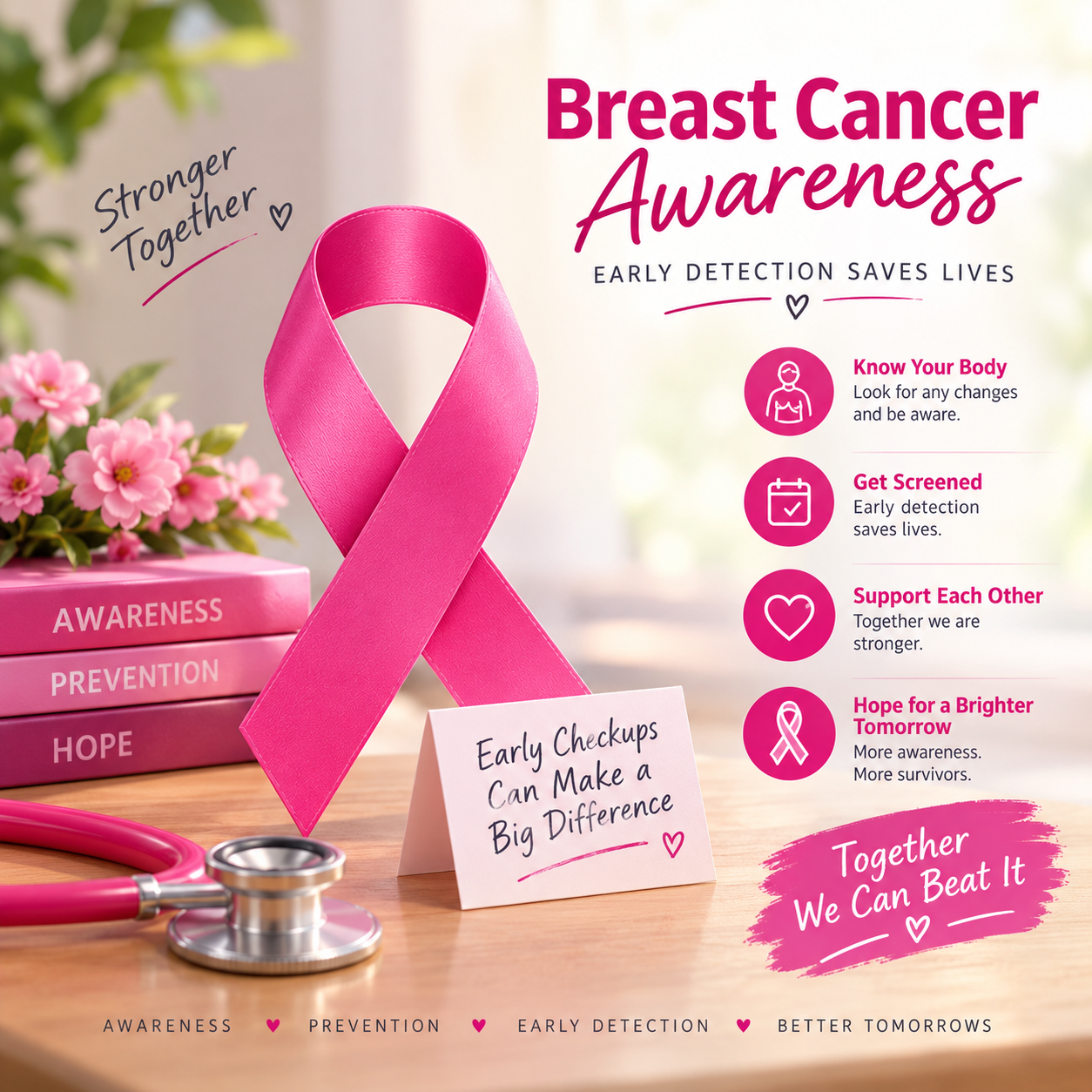
Breast Cancer Awareness Month is observed every October. During this month, organizations and communities use pink ribbons, educational campaigns, fundraising activities, health talks, and public events to highlight breast cancer awareness.
The pink ribbon represents solidarity with patients, survivors, families, and people who have lost loved ones to the disease.
October is also a reminder that awareness should continue throughout the year. People need access to reliable health information, timely diagnosis, appropriate treatment, and emotional support in every month—not only during awareness campaigns.
14. Myths and Facts About Breast Cancer
|
Myth |
Fact |
|---|---|
|
Every breast lump is cancer. |
Many breast lumps are benign, but a new lump should be medically assessed. |
|
Breast cancer always causes pain. |
Breast cancer can be painless, especially in its early stages. |
|
Only women can develop breast cancer. |
Men can develop breast cancer too, although it is much less common. |
|
Only people with a family history develop breast cancer. |
Many people diagnosed with breast cancer have no known family history. |
|
A normal self-check means cancer is impossible. |
Self-awareness cannot replace appropriate screening or medical assessment. |
|
Breast cancer is always untreatable. |
Many cases can be treated successfully, especially when detected early. |
15. Conclusion: Spread Awareness, Encourage Early Action
Breast Cancer Awareness Month is more than an annual campaign. It is an opportunity to educate people, challenge misconceptions, encourage early diagnosis, and support everyone affected by breast cancer.
Understanding the symptoms, knowing the risk factors, following appropriate screening guidance, and seeking medical advice when changes occur can make a meaningful difference. Equally important is creating a society where patients receive compassionate care and feel comfortable asking for help.
Let us use October to spread knowledge, encourage conversations, and remind people that breast health deserves attention throughout the year.
Breast Cancer Awareness Month
Early Detection. Timely Treatment. Hope for the Future.
Know the signs. Speak up. Seek medical advice. Support every patient and survivor.
Together, we can raise awareness and help save lives.
References for your article
-
World Health Organization (WHO) — Breast Cancer Fact Sheet.
-
National Cancer Institute — Signs and Symptoms of Breast Cancer.
-
National Cancer Institute — Breast Cancer Screening.
-
Centers for Disease Control and Prevention (CDC) — Breast Cancer Awareness.
Medical note: This article is intended for public education and awareness. It is not a substitute for professional medical advice, diagnosis, or treatment.
Comments (0)
Log in to leave a comment.
No comments yet. Be the first to share your thoughts!